

UN Women Training Centre eLearning Campus
Search results: 36

Gender Responsive Budgeting, Training of Trainers

Learning Modality: Face-to-Face
Date: 18 – 22 September (English) | 25 – 29 September (Spanish)
Duration: 4 weeks online, 5 days Face-to-Face
Location: Santo Domingo
Language: English, Spanish
Tuition fee: USD $1500
Scholarship: Available based on scholarship policy
Modalidad de aprendizaje : Presencial
Fecha: 18-22 de septiembre (inglés) | 25-29 de septiembre (español)
Duración: 5 días
Lugar: Santo Domingo
Idioma: Inglés y español
Matrícula: USD $1500
Becas: Disponibles según la política de becas
Modalité d’apprentissage : Présentiel
Date : 18 – 22 septembre (en anglais) | 25 – 29 septembre (en espagnol)
Durée : 4 semaines en ligne, 5 jours en présentiel
Lieu : Saint-Domingue
Langue : Anglais et espagnol
Coût : USD $1500
Bourses: Disponibles conformément à la politique relative aux bourses
This course seeks to enhance the knowledge and capacity of trainers /facilitators by providing training in the field of gender responsive budgeting (GRB) and on specific topics in this field. This face to face course aims to combine theory with hands-on training for GRB and to provide participants with the necessary skills and tools to develop an efficient capacity development strategy.
La finalidad del curso es mejorar el conocimiento y la capacidad de las y los formadores/facilitadores a través de una capacitación en materia de elaboración de presupuestos con perspectiva de género, en la que además se abordarán temas específicos en este ámbito. Este curso presencial busca combinar la formación teórica con el aprendizaje práctico en el terreno de la elaboración de presupuestos con perspectiva de género, así como dotar a las y los participantes de las aptitudes y las herramientas necesarias para desarrollar una estrategia eficiente de desarrollo de capacidades.
Ce cours vise à enrichir les connaissances et à renforcer les capacités des formateurs/facilitateurs en dispensant des formations portant sur le domaine de la budgétisation sensible au genre et sur des sujets spécifiques y afférents. Ce cours en présentiel est conçu pour allier la théorie à des formations pratiques sur la budgétisation sensible au genre et pour munir les participants des compétences et des outils nécessaires à l’élaboration d’une stratégie efficace de développement des capacités.
During one week, participants will undertake Training of Trainers (TOT) sessions, theoretical sessions, practical exercises, debates and participatory dynamics. In theoretical sessions on GRB, specific tools or methodologies will be presented, analyzed and discussed in depth. Specific country examples and practical hands-on-training exercises will be included in each session, allowing students to combine theory with practice. Guided by a participatory dynamic, the sessions on training needs will also be prepared and delivered by a trainer via a horizontal learning process wherein both trainers and trainees learn from one another. Finally, the course will include ToT sessions aimed to enhance training skills of participants in the subject of GRB. During the TOT sessions, each student is expected to present a GRB session to be developed in groups of 5 persons.
Durante una semana, las y los participantes asistirán a sesiones de formación de formadores, sesiones teóricas, realizarán ejercicios prácticos, celebrarán debates y llevarán a cabo dinámicas participativas. En las sesiones teóricas sobre la elaboración de presupuestos con perspectiva de género se expondrán, analizarán y explicarán en profundidad herramientas o metodologías concretas. En cada sesión se incluirán ejemplos nacionales específicos y ejercicios prácticos, lo que permitirá a las y los alumnos combinar teoría y práctica. Guiadas por una dinámica participativa, las sesiones sobre las necesidades de capacitación también estarán preparadas e impartidas por una formadora a través de un proceso de aprendizaje informal en la que docentes y estudiantes puedan aprender mutuamente. Por último, el curso incluirá sesiones de formación de formadores dirigidas a mejorar las aptitudes de capacitación de las y los participantes en el tema de la elaboración de presupuestos con perspectiva de género. Durante estas sesiones, se espera que cada estudiante presente una sesión dedicada a este tema, que se desarrollará en grupos de cinco personas.
Pendant une semaine, les participants suivront les sessions de formation des formateurs et des sessions théoriques, avec des exercices pratiques et des débats, le tout dans le cadre d’une dynamique participative. Lors des sessions théoriques sur la budgétisation sensible au genre, des outils ou des méthodes spécifiques seront présenté(e)s et feront l’objet d’analyses et de discussions approfondies. Des exemples de pays particuliers et des exercices de formation pratiques seront compris dans chaque session, ce qui permettra aux élèves d’allier la théorie à la pratique. Des sessions sur les besoins en formation, axées sur une dynamique participative, seront également préparées et menées par une formatrice/un formateur à l’aide d’un processus d’apprentissage horizontal, dans lequel les formateurs et les stagiaires apprennent les uns des autres. Enfin, le cours comprendra des sessions de formation des formateurs visant à renforcer les compétences de formation des participants sur le sujet de la budgétisation sensible au genre. Lors des sessions de formation des formateurs, chaque élève devra présenter une session sur la budgétisation sensible au genre destinée à être élaborée dans des groupes de 5 personnes.
The course will be of particular benefit to:
- Development practitioners including United Nations System staff, researchers, policy-makers, civil society and advocates who are working on gender mainstreaming in different spheres such as public policy, planning and budgeting.
- Gender trainers and/or programme officers with a good level of knowledge on gender responsive budgeting.
El curso resultará particularmente útil a:
- profesionales que trabajen en el campo del desarrollo, incluido el personal del sistema de las Naciones Unidas, personal investigador, responsables de la formulación de políticas, la sociedad civil y defensores que trabajen en el ámbito de la transversalización del género en diferentes esferas, como la política pública, la planificación y la elaboración de presupuestos;
- especialistas en capacitación de género o responsables de programas con altos conocimientos sobre elaboración de presupuestos con perspectiva de género.
Le cours sera particulièrement bénéfique pour :
- Les praticiens du développement, dont le personnel du système des Nations Unies, les chercheurs, les responsables politiques, les représentants de la société civile et les défenseurs de l’égalité des sexes qui œuvrent à l’intégration du genre dans différents domaines tels que la politique publique, la planification et la budgétisation.
- Les formatrices/formateurs pour l’égalité des sexes et/ou les responsables de programmes disposant d’un bon niveau de connaissances sur la budgétisation sensible au genre.
Registration currently closed
Registro actualmente cerrado
Enregistrement actuellement fermé
Gender-Responsive Budgeting: Advanced Course
Learning Modality:Face-to-Face
When/Where : 9 - 13 October, 2017, Belgrade, Serbia
Duration: 5 days
Language: English
Tuition: USD $1,500
Gender Responsive Budgeting (GRB) is a concept and a practical approach widely extended and used in developed and developing countries in the last 35 years. It can serve as a tool for achieving the triple goal of promoting development, enhancing gender equality and fulfilling human rights. UN Women supports efforts to ensure gender-responsive governance frameworks and expands its scope to engage with planning processes, to upscale the approaches and lessons learned and to institutionalize them within public administration at large.
This face-to-face course aims to combine theory with hands-on training to develop technical skills for implementing specific Gender Responsive Budgeting tools related to governmental spending.
Upon completion of the training, participants will be able to:
- Discuss GRB in an holistic way
- Examine key elements for GRB such as actors, strategies, good practices and challenges wimplementing GRB
- Interpret how technical tools for GRB can be tailored to different contexts
The course will be of particular benefit to development practitioners including United Nations System staff, researchers, policy-makers, civil society and advocates who are working on gender mainstreaming in different spheres such as public policy, planning and budgeting.
Requirements:
- English language skills
- Interest in obtaining technical and training skills in GRB
- Commitment to devote 5 full days over the course of 1 week
- If possible, bring a laptop
Prerequisites:
Proven experience in gender responsive budgeting: To enroll in the course, it is compulsory to demonstrate knowledge of GRB (i.e. academic or professional experience).
Gestion axée sur les resultats (RBM_FR)
Learning Modality:Self-paced
Date: Available online all year
Duration: Approximately 40 minutes each module.
Language: Language: English
Tuition fee: Free
A comprehensive training programme to equip UN Women staff with the knowledge and skills to apply results-based management (RBM) principles in supporting UN Women programming processes. In response to the need for increased accountability to support implementation of the 2030 Agenda, this course offers a mix of knowledge and skills for advancing the implementation of RBM and strengthening the quality of UN Women programming at the country, regional and corporate level. Participants will become knowledgeable about RBM and its practical application. This course highlights the extent to which the implementation of RBM techniques has an impact on UN Women processes. It demonstrates how RBM contributes to national efforts for achieving development results and shapes countries’ approaches to programme design, implementation and management for results in development.
At the end of the course, participants will:
- Be able to apply results-based management in country, regional and corporate level programming;
- Understand and be prepared to use different programme planning, monitoring and reporting tools;
This course is organized through 10 modules:
- Module 1: Introduction to RBM
- Module 2: Problem and Context Analysis
- Module 3: Results Chain
- Module 4: Outcomes
- Module 5: Outputs
- Module 6: Indicators
- Module 7: Planning for Results
- Module 8: Theory of Change
- Module 9: Monitoring Results
- Module10: Results Reporting
All UN Women staff members involved in planning, implementation, monitoring and reporting at country level, regional and corporate level.
GFP Kenya 2018

Learning Modality:Blended
Date: 16 - 27 April (online) / 8 - 10 May (face-to-face)
Duration: 12 days online & 3 days face-to-face
Location: Kenya
Language: English
Tuition fee: USD $1,700 (Group discounts available)
Scholarship: Available based on scholarship policy
The objective of this course is to strengthen capacity of UN System, development organizations, governments and other stakeholders to mainstream gender in public policies, programmes and projects and institutions and organizations.
This course content will be a divided into several modules covering different topics. Each module will be delivered in different sessions that can have a moderated, blended or face to face modality.
The content of each module will include:
Module 1: Basic concepts on gender mainstreaming
- Current development context. Gender Equality in the SDGs and 2030 agenda
- Global commitments to Gender mainstreaming
- Rationales for gender mainstreaming
- What is gender mainstreaming?
- Multiple strategies for applying gender mainstreaming. Why no one size fits all solution is possible?
- Added value of gender mainstreaming
Module 2: Gender mainstreaming in Programmes and Projects Cycle
- Applying Gender Analysis to the project cycle
- Formulating Results for Gender Equality within Programme Results-based Frameworks
- Gender-Responsive Budgeting
- Implementation of Programmes (including selection of partners)
- Monitoring and Evaluation of Gender Mainstreaming. Reporting on gender main-streaming results.
- Gender Mainstreaming within the Sectoral Approach, including non-traditional contexts
Module 3: Gender Mainstreaming in Public Policies
- Gender Analysis
- Design, implementation and evaluation of public policies
- Gender responsive budgeting
Module 4: Gender Mainstreaming in Institutions
- Gender mainstreaming in key organizational components. Opportunities and challenges
- (Organizational culture; Human resources; Staff accountability and incentives for gender mainstreaming; financial resources and budget)
- Nontraditional institutions
UN System and other development organizations, governments, civil society.
I Know Gender 11: Women, Peace and Security
Learning Modality: Self-paced
Date: Available online all year
Duration: Approximately 50 minutes.
Language: English and , FrenchSpanish
Tuition fee: Free
Considering the different needs of women, men, boys and girls in armed conflict and emergency situations makes peace building, recovery measures and security policies more efficient and comprehensive. This module shall give you an overview of gender and women’s rights in peace and security contexts, the international framework for advancing these, and concrete examples from the field on how to advance gender equality and women’s empowerment in peacebuilding and security initiatives.
Approximately 50 minutes.
All UN System staff and others who are interested to learn about gender issues
A Portable Document Format (PDF) viewer and Flash software is needed in order to view the course. Please note that the course will open in a separate pop-up window, therefore please ensure that pop-up blockers are de-activated. The participant will need a set of headphones or speakers as the course includes audio throughout the entire course.
I Know Gender 13: Trade and Gender Equality
Learning Modality: Self-paced
Date: Available online all year
Duration: Approximately 50 minutes.
Language: English, French and Spanish
Tuition fee: Free
Economic policies impact different segments of the population, including men and women, differently; they are not “gender neutral.” Looking at trade and economic policy through a gender lens can help us to identify these differential impacts and to make outcomes more gender-redistributive and equitable.
Approximately 50 minutes.
All UN System staff and others who are interested to learn about gender issues
A Portable Document Format (PDF) viewer and Flash software is needed in order to view the course. Please note that the course will open in a separate pop-up window, therefore please ensure that pop-up blockers are de-activated. The participant will need a set of headphones or speakers as the course includes audio throughout the entire course.
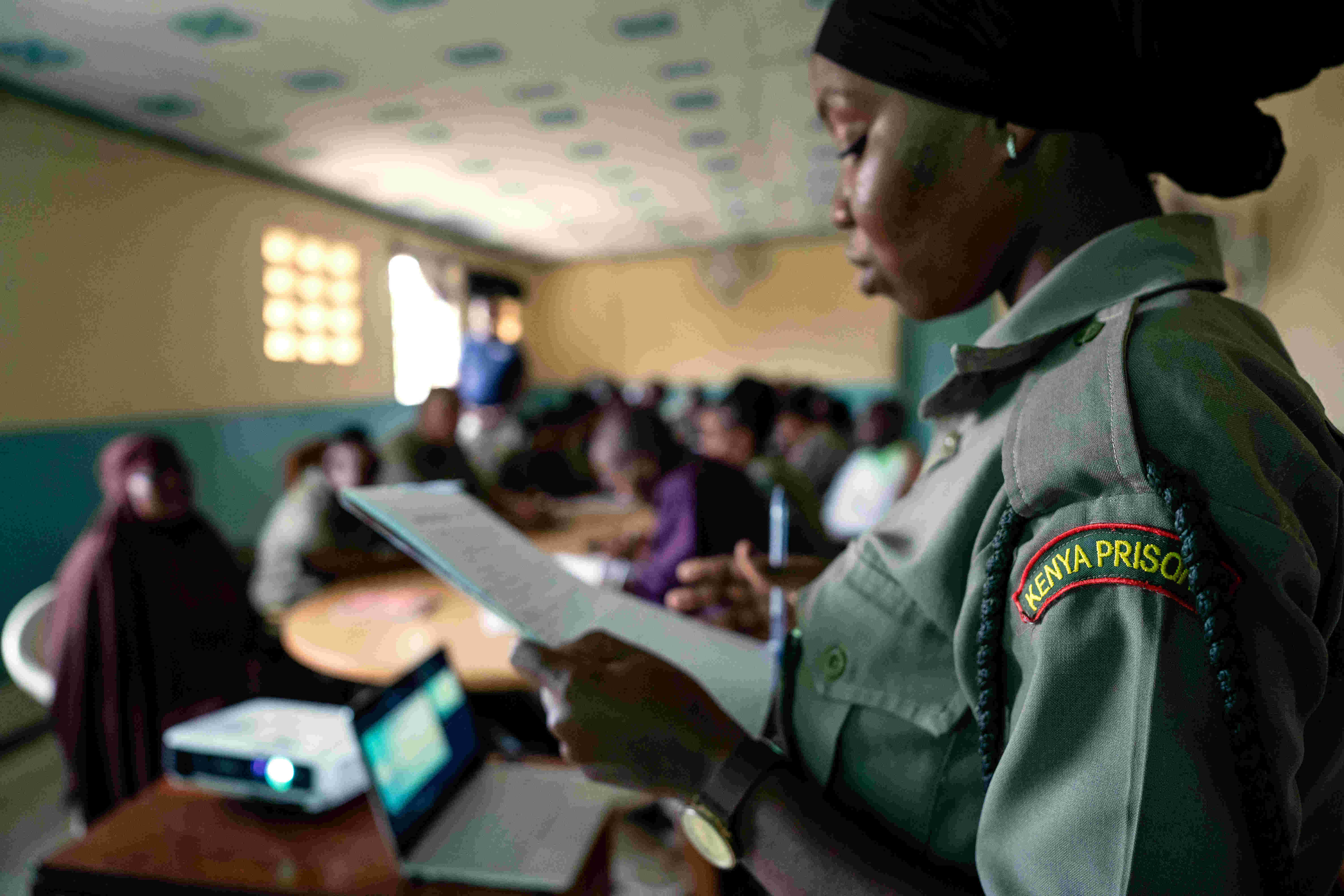
I Know Gender 17: Gender Equality and Organized Crime
Learning Modality: Self-paced
Date: Available online all year
Duration: Approximately 2 hours.
Language: English
Tuition fee: Free
This module helps to develop and/or strengthen knowledge, understanding, and awareness of basic concepts related to gender equality and women’s empowerment as it relates to the topic of organized crime. The aim is to promote the integration of a gender equality perspective in everyday work for those working in this field, such as UN staff in its programme of work and Member States, their agents, civil society and the private sector working to counteract organized crime, with a view to bring about behaviour change and a transformational impact on women and girls. The module addresses thematic topics relevant to UNODC’s mandated areas of work – across the three pillars of its work programme (normative work, research and analytical work, as well as field-based technical cooperation projects to enhance the capacity of Member States to counteract illicit drugs, crime, corruption and terrorism).
Approximately 2 hours.
- All UN personnel with and without a specific background on gender equality and at all levels.
- General public
- UNODC’s respective external partners and stakeholders (e.g. governments, development partners, transport service providers, non-governmental sector, academia and consultancy firms).
After completing this module participants will be able to:
- Understand basic concepts related to organized crime and gender equality.
- Explain why gender equality matters in discussing organized crime.
- Recognize how gender influences different people’s experiences in relation to organized crime- as participants, as victims and as justice actors.
- Demonstrate ways to mainstream gender into UN’s efforts on countering organized crime and the justice sector’s response.
A Portable Document Format (PDF) viewer is needed in order to view the course. Please note that the course will open in a separate pop-up window, therefore please ensure that pop-up blockers are de-activated. The participant will need a set of headphones or speakers as the course includes audio throughout the entire course.
I Know Gender 4: Women´s Economic Empowerment
Learning Modality: Self-paced
Date: Available online all year
Duration: Approximately 50 minutes.
Language: English, French and Spanish
Tuition fee: Free
Women’s economic empowerment has many different aspects, which often come into play in our work at the UN, whether we are working to hold States accountable regarding their human rights commitments, promoting decent work for women and men, seeking work-life balance in our personal lives, or developing training or microfinance programs for women, among other areas. This module will introduce you to some key reasons and strategies for promoting women’s economic empowerment.
Approximately 50 minutes.
All UN System staff and others who are interested to learn about gender issues
A Portable Document Format (PDF) viewer and Flash software is needed in order to view the course. Please note that the course will open in a separate pop-up window, therefore please ensure that pop-up blockers are de-activated. The participant will need a set of headphones or speakers as the course includes audio throughout the entire course.
I Know Gender 6: Violence against Women and Girls
Learning Modality: Self-paced
Date: Available online all year
Duration: Approximately 50 minutes.
Language: English, French and Spanish
Tuition fee: Free
After completing this module, you will recognize violence against women and girls as gender-based violence; identify the human rights framework that defines violence against women and girls as a violation; be able to name different forms of violence against women and girls throughout the life cycle and in specific contexts; be able to identify some of the causes and factors that put women and girls at risk; and discover some of the key strategies to address violence against women and girls.
Approximately 50 minutes.
All UN System staff and others who are interested to learn about gender issues
A Portable Document Format (PDF) viewer and Flash software is needed in order to view the course. Please note that the course will open in a separate pop-up window, therefore please ensure that pop-up blockers are de-activated. The participant will need a set of headphones or speakers as the course includes audio throughout the entire course.
Je connais le genre 11: Des Besoins différents - Des chances égales

Modalité d’apprentissage : En autonomie
Date : Disponible en ligne toute l’année
Durée : Environ 50 minutes
Langue : Anglais, français et espagnol
Coût : Gratuit.
Considering the different needs of women, men, boys and girls in armed conflict and emergency situations makes peace building, recovery measures and security policies more efficient and comprehensive. This module shall give you an overview of gender and women’s rights in peace and security contexts, the international framework for advancing these, and concrete examples from the field on how to advance gender equality and women’s empowerment in peacebuilding and security initiatives.
Environ 50 minutes.
Tout le personnel des Nations Unies et toute personne intéressée par les questions d’égalité des sexes.
Les organismes partenaires ayant contribué aux modules thématiques optionnels pour le présent cours sont les suivants : CCI-OIT, HCDH, ONUSIDA, CNUCED, UNESCO, UNFPA, VNU et PAM. En outre, les organismes suivants ont pris part à l’examen par les pairs qui a permis de forger un consensus sur les modules et le contenu de base du cours : CESAO, FAO, AIEA, FIDA, OIM, CCI-ILO, HCDH, ONUSIDA, PNUD, UNESCO, UNFPA, UNICEF.
Les versions les plus récentes d’Adobe Reader et Adobe Flash sont nécessaires pour visionner le cours. Veuillez noter que le cours s’ouvre dans une fenêtre contextuelle et qu’il faut donc s’assurer de désactiver le bloqueur de fenêtres contextuelles. Sont également nécessaires un casque d’écoute ou des haut-parleurs, étant donné qu’il y a une piste audio tout au long du cours.