Advancing Gender Equality, Disability and Social Inclusion in Samoa
The objective of this training is to strengthen the capacity of Government of Samoa staff and key partners to:
- Integrate GEDSI principles into policy development and implementation;
- Apply inclusive approaches within budgeting and planning processes;
- Improve equitable and inclusive public service delivery; and
- Strengthen leadership and institutional accountability for inclusive governance.
The initiative also aims to contribute to building a sustainable community of practice for GEDSI across government institutions and partner organizations.
The delivery of the focused online and certificate-level training courses will be spread over a period of five months from July to August 2026.
Training pathway 1: Advancing Gender Equality and Inclusion in Policies, Programmes, and Operations
Phase 0: I Know Gender 1-2-3
Phase 1 -Foundations (self-paced, online):
- Gender Equality pathway for managers and programme/admin staff
Phase 2 – Certificate courses (moderated, online):
- Gender and economics
- Gender-responsive budgeting
Training pathway 2: Fostering transformative and inclusive leadership for gender equality
Phase 0: I Know Gender 1-2-3
Phase 1 - Foundations (self-paced, online):
Learning Pathway on Transformative Leadership for Gender Equality
Phase 2 - Certificate courses (moderated, online):
Transformative Leadership – Leading for Gender Equality & Women’s Rights
Government of Samoa staff and key partners
Gender equality pathway for Managers and Programme and Admin staff - GEDSI
Learning Modality: Self-paced
Date: Available online all year
Duration: Approximately 10 hours
Language: English
Tuition fee: FREE
The overall objective of this learning pathway is to provide development practitioners the opportunity to build and/or enhance their expertise in the area of gender equality and women’s empowerment. Working towards this end, all learning pathway participants are, as a start, trained in common gender concepts, the human rights-based approach and the strategy of gender mainstreaming, as well as the UN’s work on gender equality.
The learning pathway also considers staffs’ employment in distinct branches and provides access to suitable material for programme and operations staff and managers.
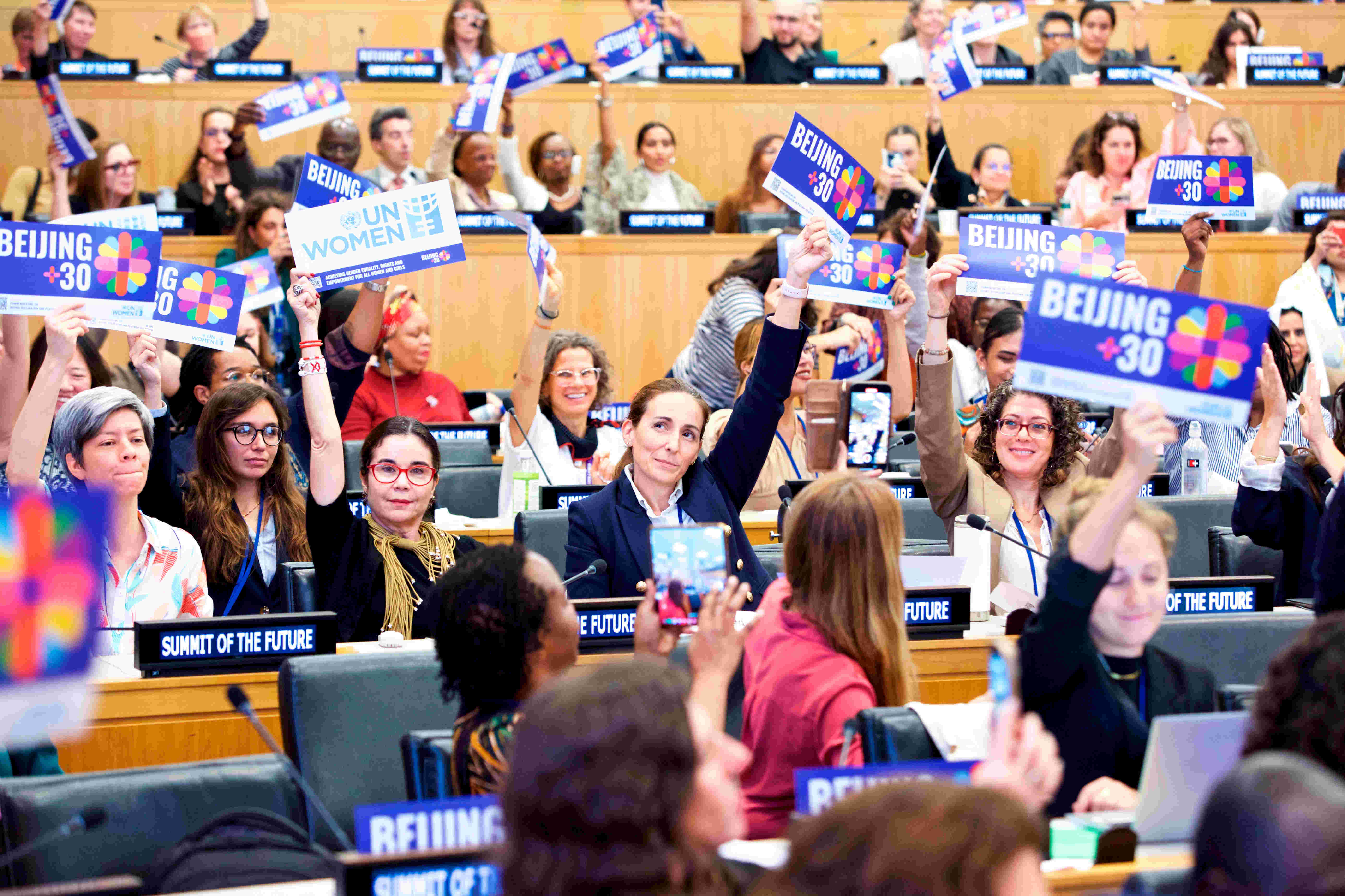
I Know Gender 1-2-3: Gender Concepts to get Started - Samoa
Learning Modality: Self-paced
Date: Available online all year
Duration: Approximately 2.5 hours for the 3 core modules required to receive the course certificate. Users may move through the optional thematic modules at their own pace.
Language: English, French and Spanish
Tuition fee: Free
This course aims to develop and/or strengthen awareness and understanding of gender equality and women’s empowerment as a first step towards behavioral change and the integration of a gender perspective into everyday work for all UN staff at headquarters, regional and country levels.
It provides an introduction to the concepts, international framework, and methods for working toward gender equality and women’s empowerment. It also offers users the opportunity to make links between gender and specific thematic areas such as work; education; political participation; emergencies; peace and security; sexual and reproductive health; sexual and gender diversity and human rights; and violence against women.
Approximately 2.5 hours for the 3 core modules required to receive the course certificate. Users may move through the optional thematic modules at their own pace.
All UN System staff and others who are interested to learn about gender issues.
A Portable Document Format (PDF) viewer and Flash software is needed in order to view the course. Please note that the course will open in a separate pop-up window, therefore please ensure that pop-up blockers are de-activated. The participant will need a set of headphones or speakers as the course includes audio throughout the entire course.
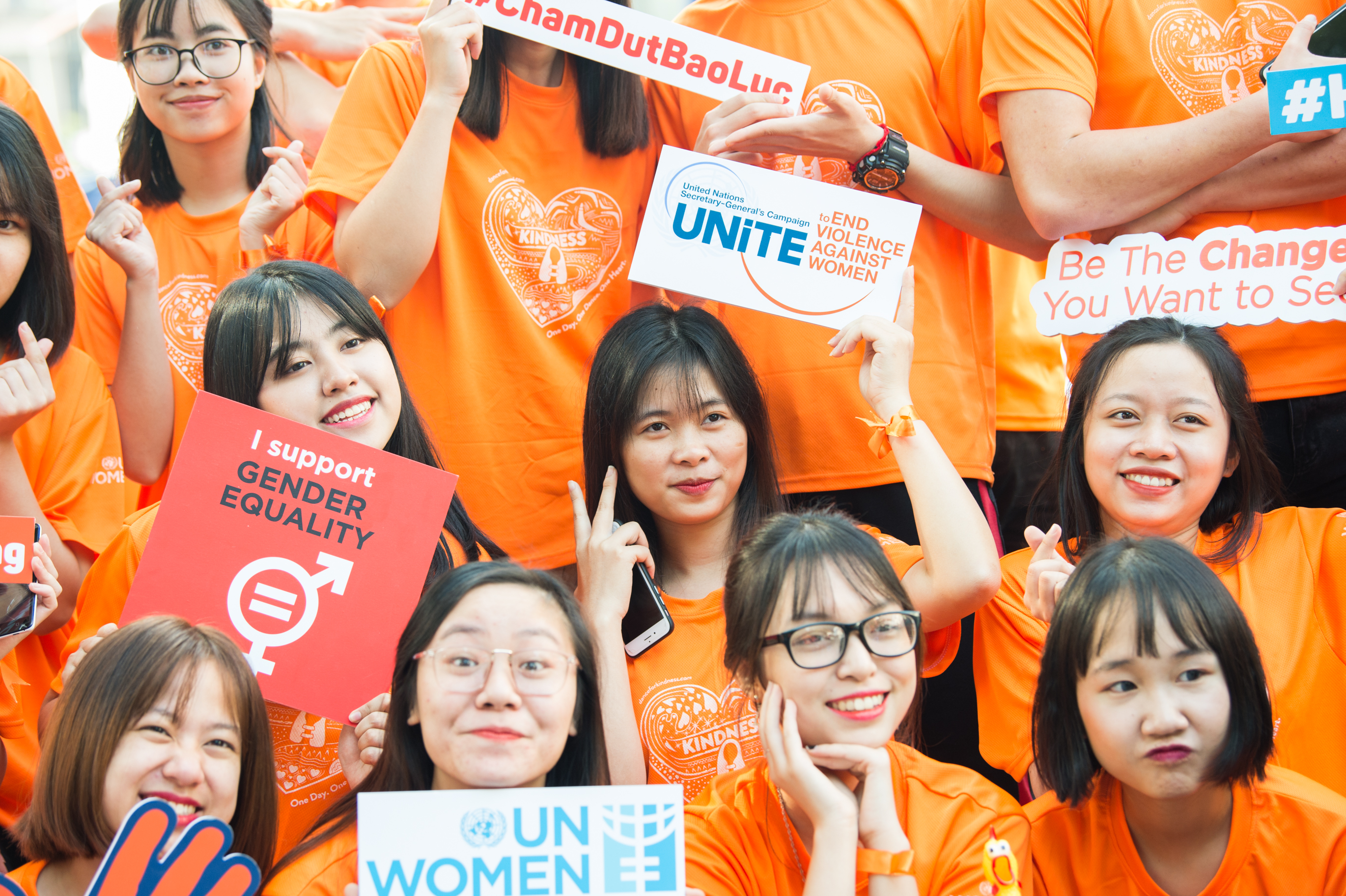
Khóa học Kiến thức về Giới 1-2: Khái niệm cơ bản; và Khuôn khổ Quốc tế về Bình đẳng giới (tiếng Việt)
Hình thức học: Tự học theo tiến độ cá nhân
Thời gian: Khóa học luôn có sẵn trực tuyến quanh năm
Thời lượng: Khoảng 2,5 giờ cho 3 mô-đun cốt lõi cần thiết để nhận chứng chỉ. Người học có thể hoàn thành các mô-đun tùy chọn theo nhịp độ riêng.
Ngôn ngữ: Tiếng Anh, tiếng Pháp, tiếng Tây Ban Nha và tiếng Việt
Học phí: Miễn phí
Khóa học này nhằm phát triển và/hoặc tăng cường nhận thức và hiểu biết về bình đẳng giới và trao quyền cho phụ nữ như một bước đầu hướng tới thay đổi hành vi và tích hợp quan điểm giới vào công việc hàng ngày cho tất cả cán bộ Liên hợp quốc ở trụ sở, khu vực và cấp quốc gia.
Khóa học cung cấp giới thiệu về các khái niệm, khuôn khổ quốc tế và phương pháp làm việc để hướng tới bình đẳng giới và trao quyền cho phụ nữ. Người học cũng sẽ có cơ hội liên kết vấn đề giới với các lĩnh vực cụ thể như: công việc; giáo dục; tham gia chính trị; ứng phó khẩn cấp; hòa bình và an ninh; sức khỏe sinh sản và tình dục; đa dạng giới và quyền con người; cũng như bạo lực đối với phụ nữ.
Khoảng 2,5 giờ cho 3 mô-đun cốt lõi cần hoàn thành để nhận chứng nhận khóa học. Người học có thể tự học các mô-đun bổ sung theo nhịp độ riêng.
Tất cả cán bộ hệ thống Liên hợp quốc và những người quan tâm tìm hiểu các vấn đề về giới.
Cần có phần mềm đọc PDF và Flash để xem khóa học. Khóa học sẽ mở trong cửa sổ pop-up riêng, vì vậy hãy đảm bảo tắt chức năng chặn pop-up. Người học sẽ cần tai nghe hoặc loa vì toàn bộ khóa học có phần âm thanh đi kèm.

Crime Statistics from a Gender Perspective
Learning Modality: Self-paced
Date: Available online all year
Duration: Approximately two hours, including the final quiz.
Language: English
Tuition fee: Free
In this course you will learn:
- Understand the importance of incorporating a gender perspective in collecting, producing, analyzing, and disseminating crime statistics.
- Apply tools and frameworks to improve the production, collection, analysis, and dissemination of crime data from a gender perspective.
- Analyze the opportunities and challenges of working with various types of data sources.
- Evaluate the relationship between data, crime, and gender at national, regional, and international levels.
- Understand recent global initiatives and statistical frameworks aimed at measuring technology-facilitated violence against women (TFVAW) and the gender-related killing of women and girls.
- Create capacity to produce gender and crime-related SDG indicators using microdata.
Approximately six hours.
- Module 1: The Need for a Gender Perspective in Crime and Criminal Justice Statistics
- Module 2: Criminal Acts from a Gender Perspective
- Module 3: The Gender Perspective in the Criminal Justice System
- Module 4: Computing SDG Indicators
- Module 5: Gender-related Killing of Women and Girls (femicide/ feminicide)
- Module 6: Technology-facilitated Violence Against Women
The e-learning course is designed for professionals working in the field of crime and criminal justice statistics, whose primary responsibilities include the collection, production, analysis, and dissemination of crime-related statistics and indicators. The course is also open to policymakers and decision-makers seeking to better understand the concepts and methodological foundations of crime- and gender-related SDG indicators, and to accurately interpret and apply these data for evidence-based decision-making.
Integrating Gender Equality in HIV Policies and Programming
Modalité d’apprentissage : En autonomie
Date : Disponible en ligne toute l’année
Durée : Environ 3 heures
Langue : Anglais et français
Coût : Gratuit
- Understand why gender equality and women’s empowerment are essential for successful HIV programming.
- Learn how attention to gender equality can strengthen the HIV response.
- Identify entry points for strengthening gender in HIV programming for better HIV outcomes.
- Why do gender equality and women’s empowerment matter for the HIV response?
- Interventions to address the gender dimensions of HIV at the individual level
- Interventions to address the gender dimensions of HIV at the community level
- Interventions to address the gender dimensions of HIV at the institutional level
- Interventions to address the gender dimensions of HIV at the level of policies and laws
- What can I do?
- Primary audience: Leaders and staff in governments and civil society organizations (CSO) responsible for HIV policies and programmes, such as ministries of health, national HIV programmes, and national AIDS coordinating bodies.
- Secondary audience: Staff in ministries of gender/women’s Issues, women’s organizations, and other organizations working with or representing people living with HIV so they have the same shared understanding of gender dimensions of HIV as their colleagues working in the HIV and health sectors.